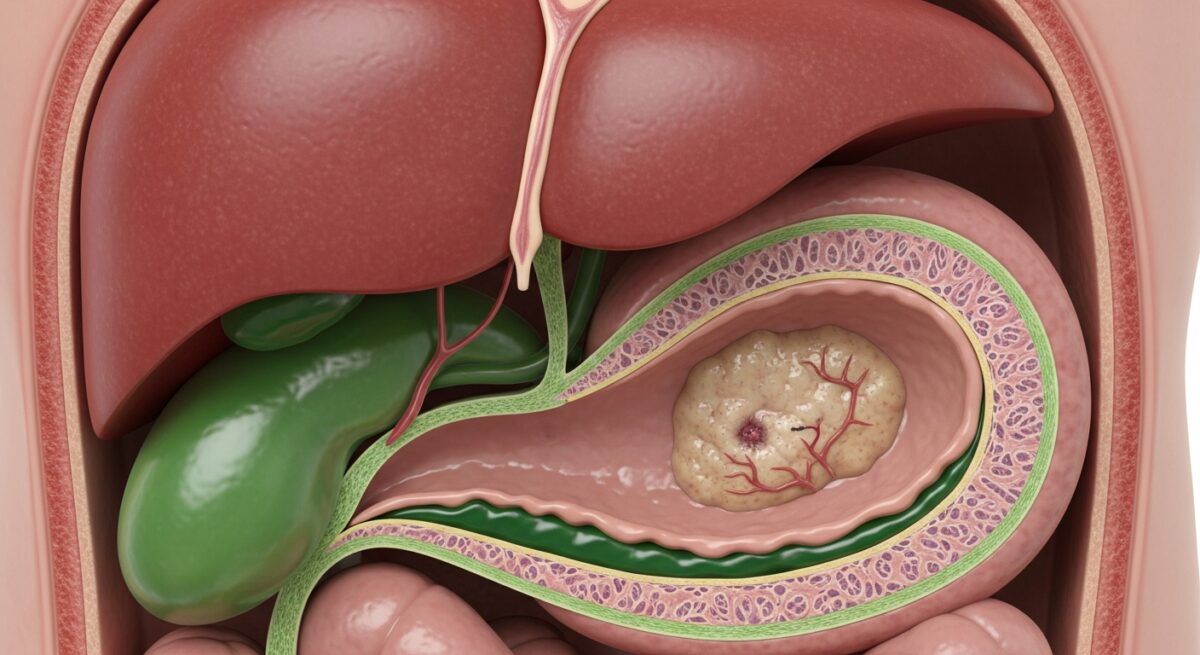
Recognizing the Signs and Symptoms of Liver Cancer
Learn to identify key signs of liver cancer for early action. For personalized guidance, call 833-203-6742.

A non-government entity
Learn to identify key signs of liver cancer for early action. For personalized guidance, call 833-203-6742.
Recognizing the visual signs of breast cancer is key for early action. For personalized guidance on screening and coverage, call 833-203-6742.
Understanding the specific types of breast cancer is crucial for determining the right treatment plan. For personalized guidance on your diagnosis, call 833-203-6742.
Learn to recognize the key signs of colon cancer in women for early detection. For personalized guidance on screening and coverage, call 833-203-6742.
Understand gallbladder cancer symptoms and treatments. For personalized guidance, call 833-203-6742.
Recognizing early rectal cancer symptoms can lead to timely diagnosis and better outcomes. For personalized guidance, call 833-203-6742.
Understand the factors behind liver cancer survival rates and how they inform prognosis. For personalized guidance, call 833-203-6742.
Recognize the key symptoms of thyroid cancer for early detection. Call 833-203-6742 to discuss coverage for screenings and specialist visits.
Get detailed information on peritoneal cancer symptoms and advanced treatment options. For expert guidance, call 833-203-6742.
Understand the symptoms and treatment options for rare heart cancer. For expert guidance, call 833-203-6742.
Understand the factors behind breast cancer survival rates and how modern treatment improves prognosis. For personalized guidance, call 833-203-6742.
Understand the severity and prognosis of a lymphoma diagnosis. For personalized guidance on cancer care and Medicare coverage, call 833-203-6742.

Through NewMedicare.com we help you to speak with a licensed insurance agent to compare rates from different carriers so that you can make informed decisions about your insurance coverage.
Hours of Operation: 9am – 6pm EST
This is a solicitation for insurance. NewMedicare.com is powered by Astoria Company Marketing, LLC, a non-government entity. Licensed insurance agents are not connected with or endorsed by the U.S. government or the federal Medicare program.
This is an advertisement.
We do not offer every plan available in your area. Currently, we represent [18] organizations that offer [52,101] products in your area. Please contact Medicare.gov, 1-800-MEDICARE, or your local State Health Insurance Program (SHIP)
to get information on all of your options.
Participating sales agencies represent Medicare Advantage HMO, PPO and PFFS organizations and stand-alone PDP prescription drug plans that are contracted with Medicare. Enrollment depends on the plan’s contract renewal. Please contact 1-800-MEDICARE (TTY users should call 1-877-486-2048), 24 hours a day/7 days a week.
Enrollment in the described plan type may be limited to certain times of the year unless you qualify for a Special Enrollment Period.
Medicare supplement insurance is available to those age 65 or older enrolled in Medicare Parts A and B, and in some states to those under age 65 eligible to Medicare due to disability or end stage renal disease.
Copyright © 2025/2026 Astoria Company Marketing, LLC. All rights reserved.
MMR-2018-2024
MMR-3494
MULTIPLAN_NEWMEDWEB2026_HCI_C

Your Global Privacy Control signal has been honored. Advertising and sale/sharing cookies stay off unless you later enable them after withdrawing that signal.
Some technologies are strictly necessary to operate this website and cannot be disabled. Analytics, advertising, session replay, consent documentation, and similar technologies are optional and will not operate unless you provide consent.
Astoria Company and the partners named below use cookies, pixels, embedded third-party content, chat tools, analytics technologies, and similar tracking technologies on this website (newmedicare.com). Some of these technologies monitor, record, and share your interactions with this website in real time, including the pages you view, the links and buttons you click, your mouse movements and scrolling, the information you type into forms, your IP address, and your device and browser identifiers. Depending on the technologies you permit, we and our named partners may also collect or receive online identifiers, cookie identifiers, browser type, operating system, referring URLs, approximate geolocation derived from your IP address, and other information about your device and browsing activity.
The partners that may receive, record, or combine this information include, where applicable: Google (including Google Analytics), Meta Platforms (Facebook), Amazon Web Services, ActiveProspect (TrustedForm), and Jornaya (a Verisk business). These partners may combine this information with other information you have provided to them or that they have collected from your use of their services or other websites, and they may use it for analytics and for cross-context behavioral advertising, analytics, measurement, fraud prevention, consent documentation, website functionality, personalized advertising and marketing. The complete and current list of providers appears in our Cookie Policy.
Clicking "Accept All" is your electronic signature and means that you consent to our and the named partners' use of these cookies and tracking technologies, including the monitoring, recording, interception, and sharing of your interactions (session replay technology) with this website as described above, for the analytics, advertising, marketing, and consent documentation purposes described in our Cookie Policy. This consent applies only to this website and these purposes.
You do not have to consent to browse this website or to obtain any product or service. Click "Reject All" and we will use only the cookies strictly necessary to operate this website or click "Cookie Settings" to choose by category. You can change or withdraw your choices at any time through the "Cookie Settings" or "Your Privacy Choices" link on this website, and we honor Global Privacy Control signals. Changes apply to future tracking activities and do not affect information lawfully collected before your updated preference was received. This pop-up does not ask you to accept our Privacy Policy or Terms of Use; those documents are linked below for your information.
Choose which optional categories to allow. Strictly necessary cookies always remain on.